
Heart Reef: Miami’s Living, Heart-Shaped Coral Reef Visible from the Air
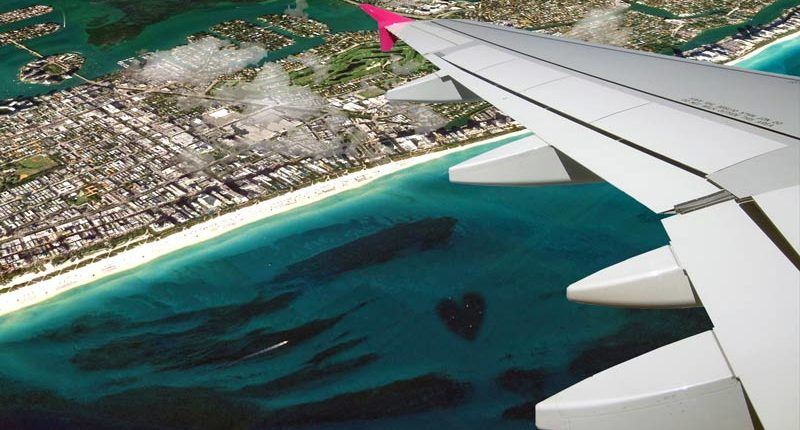
If you’ve flown into Miami International Airport on a clear day, you may have noticed something unusual in the water below. Just off the coast of Miami Beach lies a 43,500-square-foot coral reef shaped like a heart — visible from select flight paths in and out of Miami International Airport.
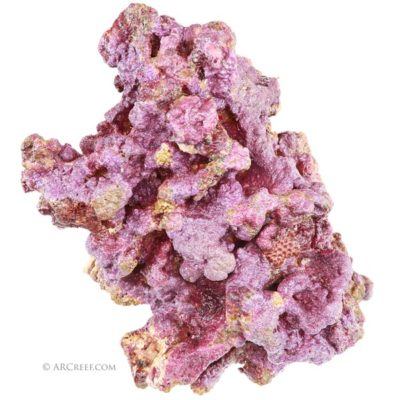
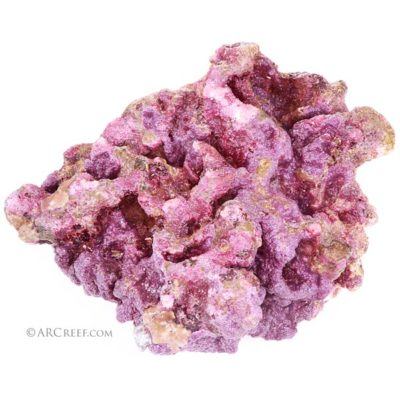
Heart Reef is a man-made aquaculture installation, designed and built by ARC Reef (Atlantic Reef Conservation) beginning in 2016. It is fully alive: a structured biological community of stony corals, gorgonian octocorals, sponges, encrusting invertebrates, and the diverse microfauna that collectively form what aquarists know as live rock. Unlike concrete reef balls or sunken vessels — which are inert substrates that organisms must colonize from scratch — Heart Reef was constructed from pre-tested calcium carbonate base material, perfectly matching a native reef, and engineered to support immediate biological recruitment.
Why we built a reef in the shape of a heart
The honest answer is that a barren patch of seafloor doesn’t make people care. A heart-shaped coral reef does.
Florida’s reef tract — the only living coral barrier reef in the continental United States and the third-largest reef system in the world — has lost approximately 90% of its live coral cover over the past 40 years, according to NOAA Fisheries. The 2023 marine heat wave accelerated that collapse: a 2024 NOAA assessment of restoration outplants found fewer than 22% of staghorn corals and fewer than 5% of elkhorn corals survived the bleaching event. Coral cover at NOAA’s seven priority restoration sites in the Florida Keys is now around 2%. The federal target to restore healthy ecosystem function is 25%.
If 90% of Florida’s trees had vanished in 40 years, every news outlet in the state would cover it daily. But because reefs exist out of sight, the loss has been largely invisible to the public that depends on them — for fisheries, storm protection, tourism, and the cultural identity of coastal Florida.
We built Heart Reef to make the loss, and the recovery, visible. Literally visible — from a commercial airliner at 10,000 feet — and figuratively visible to anyone who hears the story.
How Heart Reef was built
The project planning stage began in 2012 with site selection and a 60-day biological assay. We deployed instrumented test rocks at the candidate location to continuously monitor temperature, current velocity, pH, turbidity, photosynthetically active radiation (PAR), and dissolved oxygen. After 60 days, we recovered the rocks and confirmed early colonization by encrusting soft corals and gorgonians — empirical evidence that the site supported recruitment without much intervention.
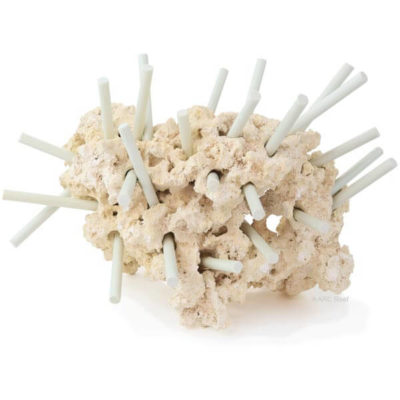
The reef material itself is the same product we sell as Reef Stacker Dry Rock — a low-density, porous, silica-free aragonite mined from a freshwater aquifer. Every batch deployed offshore was tested and approved by NOAA before placement. This is the same rock we ship to home aquarists today, originating from the same source and meeting the same federal standards. Hobbyists running ARC Reef rock in their tanks are using a product that has been validated in open-ocean reef construction at scale.
The 4-month-long construction phase was staged on the City of Miami’s Virginia Key, and oversight was provided by the Parks Department. Truckloads of source rock were staged on shore, then ferried offshore and placed by hand by our dive team over the course of several months. We are deeply grateful to the City of Miami and to the team at Virginia Key Outdoor Center for making the staging logistics possible — without their cooperation in those first months, the project would not have existed.
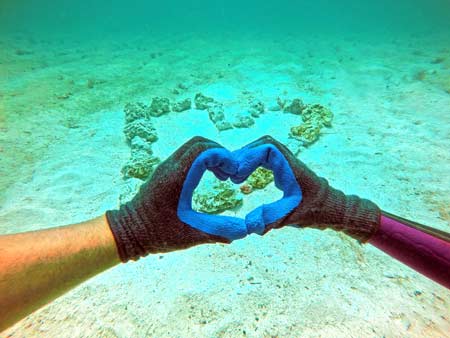
Heart Reef, Miami in 2012 – During the biological testing phase, these Live Rocks were placed on the sea floor for 60 days. During those 60 days, data loggers measured temperature change, current, pH, turbidity, PAR, and other parameters to ensure this location was just right. At the 60-day mark, we examined the rocks to find encrusting soft corals and Gorgonians already attaching themselves. The permitting process was finished in 2015, and construction began shortly after.
Heart Reef in 2026
To date, we have placed over 200,000 pounds of source reef material across the 43,500-square-foot footprint. The reef is alive, growing, and continuing to recruit native species. We are propagating native corals onto the structure, including a stony pillar coral that was once common to the area but is now rarely seen.
Our long-term plan included three swim-through arches and dive-accessible caves to allow public engagement with the reef. We submitted permits for these structures, but the federal water column rights regime caps vertical buildup at 25% of the available column at this site. The arches as originally designed exceeded that allowance, so they are on hold pending a redesign that fits within permitted vertical limits.
We had also begun the permitting process for propagating two endangered species — Elkhorn coral (Acropora palmata) and Staghorn coral (Acropora cervicornis) — both listed under the U.S. Endangered Species Act and central to NOAA’s Mission: Iconic Reefs initiative. That permitting work is currently paused. The pause is honest to acknowledge: the project’s lead developed an insulinoma in recent years, and the medical recovery created a multi-year gap in our permitting and public engagement work. Reef construction and maintenance continued; the regulatory expansion did not. We are now resuming.
What we are working toward
The selective breeding work continues at our laboratory facility. We are propagating small-polyp stony corals that thrive at pH 7.8 — well below current ocean averages — to produce coral lines with measurable resilience to ocean acidification. Each successive generation we raise is selected for survival under stress conditions that approximate projected mid-century ocean chemistry. This is slow work, measured in coral generations rather than fiscal quarters, but it is the kind of work that has to be done by someone, and we have the federal permitting and the laboratory infrastructure to do it.
We believe privately funded reef construction has a role alongside government-led restoration. NOAA’s Mission: Iconic Reefs commits significant federal resources to seven priority sites in the Keys; that program is essential and well-designed. But the Florida reef tract extends 350 miles, and the entire ecosystem will not recover from a single funding stream. Private aquaculture facilities like ours can extend the work — using sustainable products, returning a portion of every sale to reef rebuilding, and proving that commercial operations and conservation are not in conflict.
For every pound of aquacultured live rock we sell, we return ten pounds of new reef material to the ocean. Twenty percent of every sale — including our coralline algae products — funds Heart Reef and our offshore restoration work.
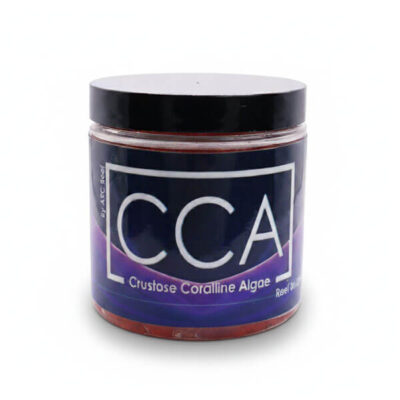
Our customers are the reason this reef exists. Every bottle of coralline algae and every order of live rock contributes to a measurable expansion of healthy reef habitat in the Florida reef tract. If you are an aquarist, a retailer, or an institutional researcher, you are not just buying a product — you are funding active reef rebuilding by a federally licensed aquaculture facility.
If you’d like to learn more about our work, visit ARC Reef Live Rock or contact us directly — particularly if you represent a research institution, dive operation, or conservation partner interested in collaboration on the next phase of the project.
Special thanks to the City of Miami , the Virginia Key Outdoor Center, and VKOC founder, Esther Alonso-Luft, whose support during the staging phase made Heart Reef possible.
Very cool, I’m resharing this. I am looking at getting dive certified. Would love to learn on this reef.
It’s a shame that we are losing our coral reefs so quickly. I hope this reef doesn’t suffer with the rest of them. Really cool concept though, look forward to hearing more about it.
Wow that’s crazy awesome! I haven’t visit Miami yet, but now I want to just to see this.
Hi, really cool proyect. This will benefit all. Have you think in Puerto Rico as the next proyect?
I tried to doing something in my possibility for the future generations and preserve the sea is a common sense objetive.You guys project is awesome .
that is awesome next time im there im checking it out