ARC Reef Marine Research: Offshore Coral Reef Project
Offshore Coral Reef Research & Restoration Site
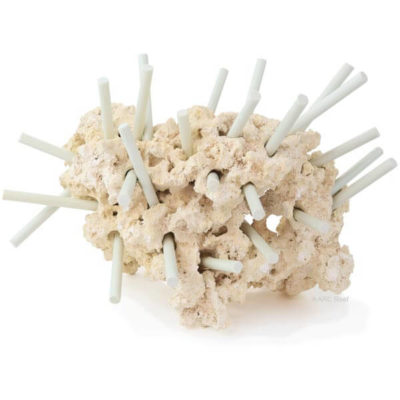
For over a decade, ARC Reef has operated a 1-acre offshore aquaculture and reef restoration zone located 3.5 miles off the coast of Miami Beach, Florida. Initiated in 2016 under federal NOAA permit and continuously expanded since, the site now encompasses more than 43,500 square feet of engineered Calcium Carbonate (CaCO3) infrastructure — a working in situ laboratory for coral propagation, larval settlement studies, and structural aquascaping methodology development.
This is a closed scientific research site. It is not a recreational dive destination, not open to the public, and not a destination for marine tourism. Access is restricted to authorized ARC Reef research vessels and dive personnel operating under federal permitting.
Regulatory Authority & Federal Permitting
The site operates under the direct legal authority of three federal and state regulatory frameworks, with active certifications maintained continuously since 2016:
- National Oceanic and Atmospheric Administration (NOAA) Federal Permit AQU-069: Authorizes ARC Reef’s offshore aquaculture and benthic deployments within United States Exclusive Economic Zone (EEZ) waters. NOAA permits of this scope are issued under the Magnuson-Stevens Fishery Conservation and Management Act and require ongoing compliance reporting and bi-annual environmental impact review.
- Florida Department of Agriculture & Consumer Services Aquaculture Product Certificate AQ0223588: Authorizes the propagation, possession, and commercial cultivation of native Florida marine species under Florida’s aquaculture regulatory framework.
- Florida Fish and Wildlife Conservation Commission Wholesale Dealer License WD-190448: Authorizes the harvest, possession, and wholesale distribution of marine biological assets cultivated at the site.
All site operations are additionally bound by U.S. Lacey Act provisions governing the interstate transport of biological materials and by Florida’s environmental isolation requirements for native species cultivation.
Structural Engineering & Hydrodynamic Resilience
The reef’s foundational matrix was originally deployed in a specialized macro-scale geometric footprint designed to track larval settlement density, current flow patterns, and biological recruitment over time. The site exists within a high-energy cyclonic corridor — the same Atlantic basin that generates Category 3+ hurricanes targeting the Florida coastline. As a result, the structure is regularly subjected to extreme hydrodynamic shear forces, particularly during named storm events.
To preserve the specific architectural baseline of the reef and combat structural displacement caused by storm energy, ARC Reef dive operations execute an annual post-season reconstructive audit. This involves physical realignment of CaCO3 infrastructure to its optimal configuration, supplementation of newly engineered structural matrices, and detailed photographic and dimensional documentation of any displacement that occurred during the prior storm cycle.
Biological Viability & Ecosystem Maturation
A decade of continuous structural additions has supported the development of a complex, mature benthic ecosystem at the site. The 43,500 sq ft zone currently supports a dense, established matrix of endemic species, including:
- Scleractinian (hard) corals: including Acropora cervicornis (Staghorn), Acropora palmata (Elkhorn), Orbicella faveolata (Mountainous Star), and Porites astreoides (Mustard Hill).
- Gorgonian octocorals: including sea whips, sea fans, and sea plumes characteristic of Florida’s southeastern reef tract.
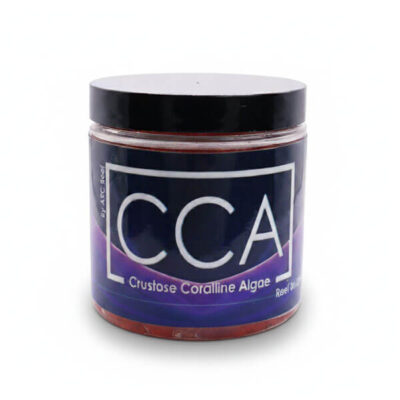
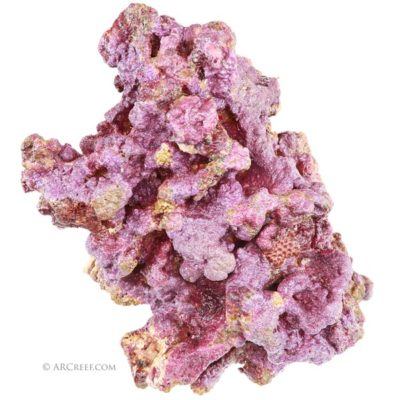
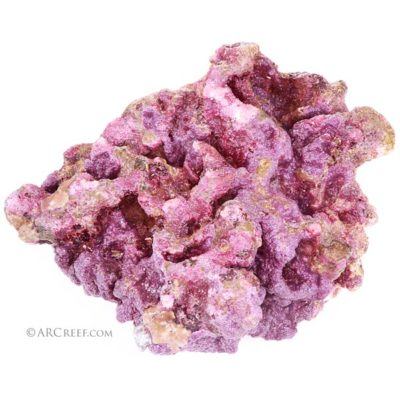
- Crustose Coralline Algae (CCA): the foundational species class for ARC Reef’s commercial aquaculture program, propagating naturally across deployed substrate.
- Native macrofauna: including resident populations of reef-associated fish species, crustaceans, and invertebrates that have established at the site over the cultivation period.
Several of the coral species cultivated at the site are listed under the Endangered Species Act and require active protection and propagation work to maintain regional populations.
Conservation Impact
ARC Reef’s offshore restoration site is part of the company’s standing commitment to coral reef conservation. The Florida Reef Tract has experienced documented coral density losses exceeding 79% over recent decades, driven by disease outbreaks, thermal stress events, and habitat degradation. Sites like this one — privately operated under federal permitting, with continuous decade-long monitoring and active restorative intervention — provide measurable contributions to regional reef recovery beyond what publicly funded conservation alone can deliver.
ARC Reef commits a defined percentage of all gross commercial sales to ongoing reef restoration operations, including this site.
Bio-Security & Site Access
This location operates under strict environmental isolation protocols. It is an active research and larval settlement zone where biological integrity must be preserved against foreign pathogen vectoring, invasive species introduction, and disturbance from unauthorized activity.
There is absolutely no public access, recreational diving, fishing, or anchoring permitted at these coordinates. The site is documented and reported to applicable federal and state authorities. Unauthorized access constitutes a violation of federal aquaculture regulations and may result in civil and criminal penalties.
Authorized media inquiries regarding documentation, footage requests, or institutional collaboration can be directed to ARC Reef research operations at info@arcreef.com or +1 (800) 452-5423.